

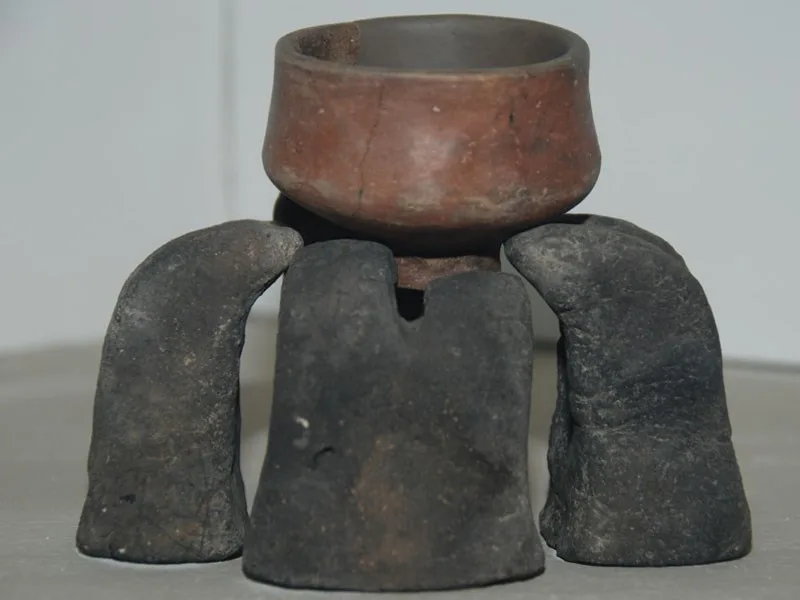
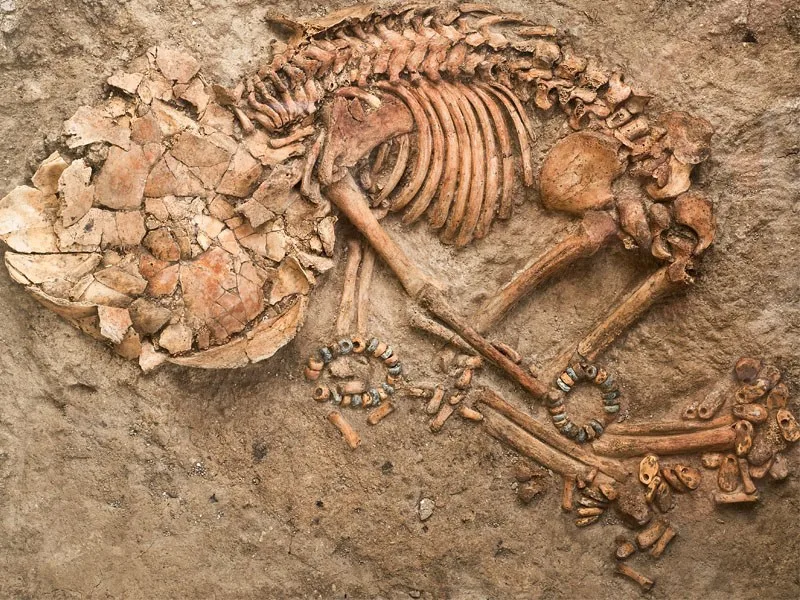
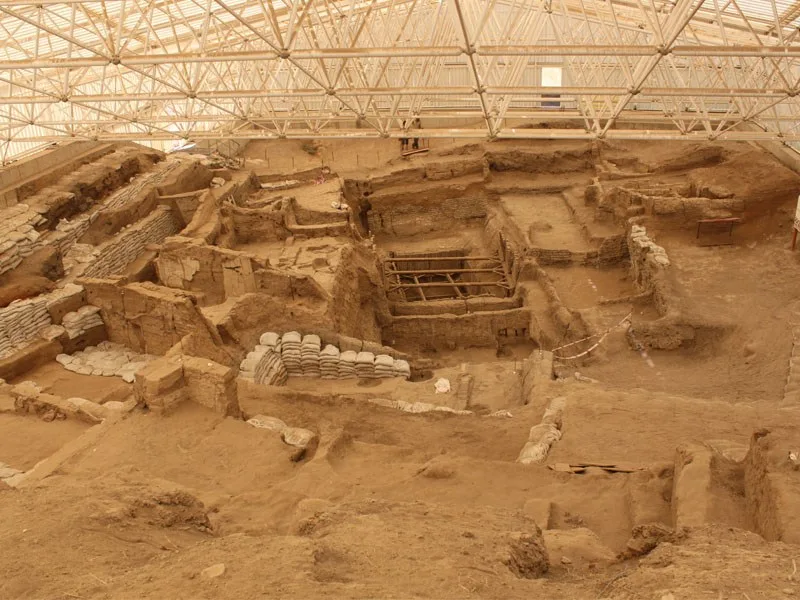
The Çatalhöyük Neolithic City, located on the South Anatolian Plateau over an area of approximately 14 hectares, witnesses significant social changes and developments such as the beginning of agriculture and hunting, coinciding with the transition to settled life, a crucial stage in the development of humanity. Composed of two mounds, the longer Eastern Mound of Çatalhöyük comprises 18 Neolithic settlement layers dating between 7400 and 6200 BC. These layers contain wall paintings, reliefs, sculptures, and other artistic elements symbolizing social organization and the transition to settled life. The Western Mound, on the other hand, exhibits cultural characteristics belonging to the Chalcolithic Period, dating between 6200 and 5200 BC. With these features, Çatalhöyük is also important evidence of the transition from villages to urban life that existed in the same geographical area for more than 2000 years. The settlement at Çatalhöyük, with its interconnected houses accessed through roofs and lacking streets, exhibits a unique characteristic. Although other Neolithic sites have been found in the Middle East and Anatolia, the Neolithic city of Çatalhöyük possesses extraordinary universal value due to the unique combination of the scale of the remains, the density of the living population, strong artistic and cultural traditions, and continuity over time.
ÇATALHÖYÜK NEOLITHIC ANCIENT CITY
Çumra, Çumra, Konya
Information
Category
Historical Places
Historical Places
Address
Çumra, Çumra, Konya
Çumra, Çumra, Konya
Views
111
111
Overview
Nearby Places
No nearby content yet.
Map
Çumra, Çumra, Konya
Activities in the Area
No activities found in this area.
Events in the Area
No events found in this area.