

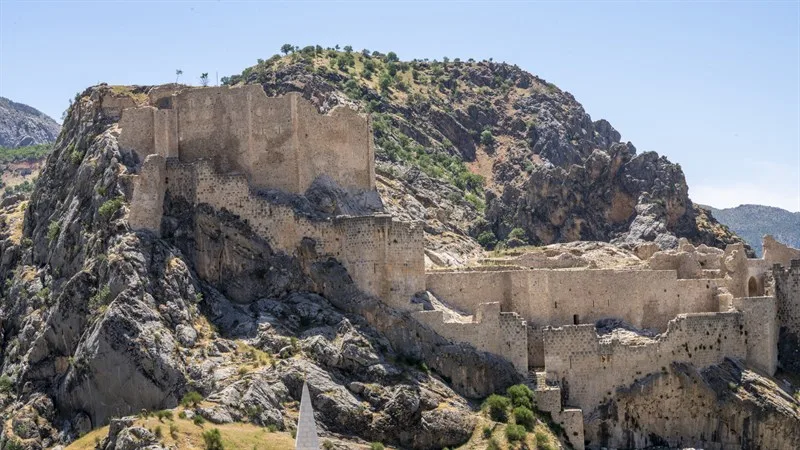
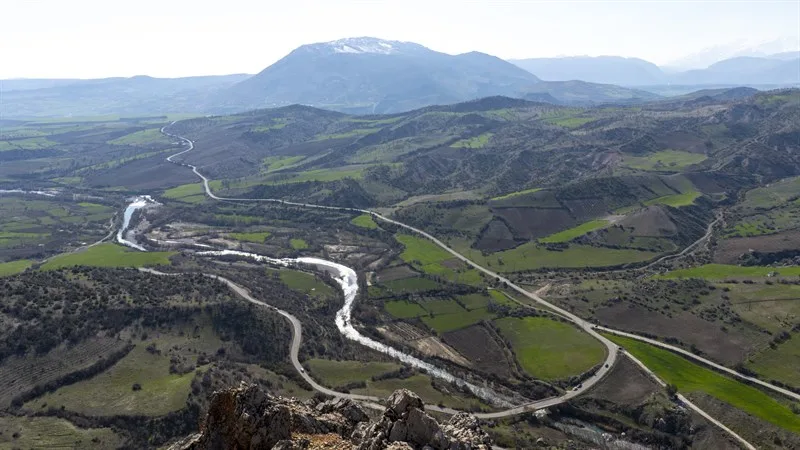
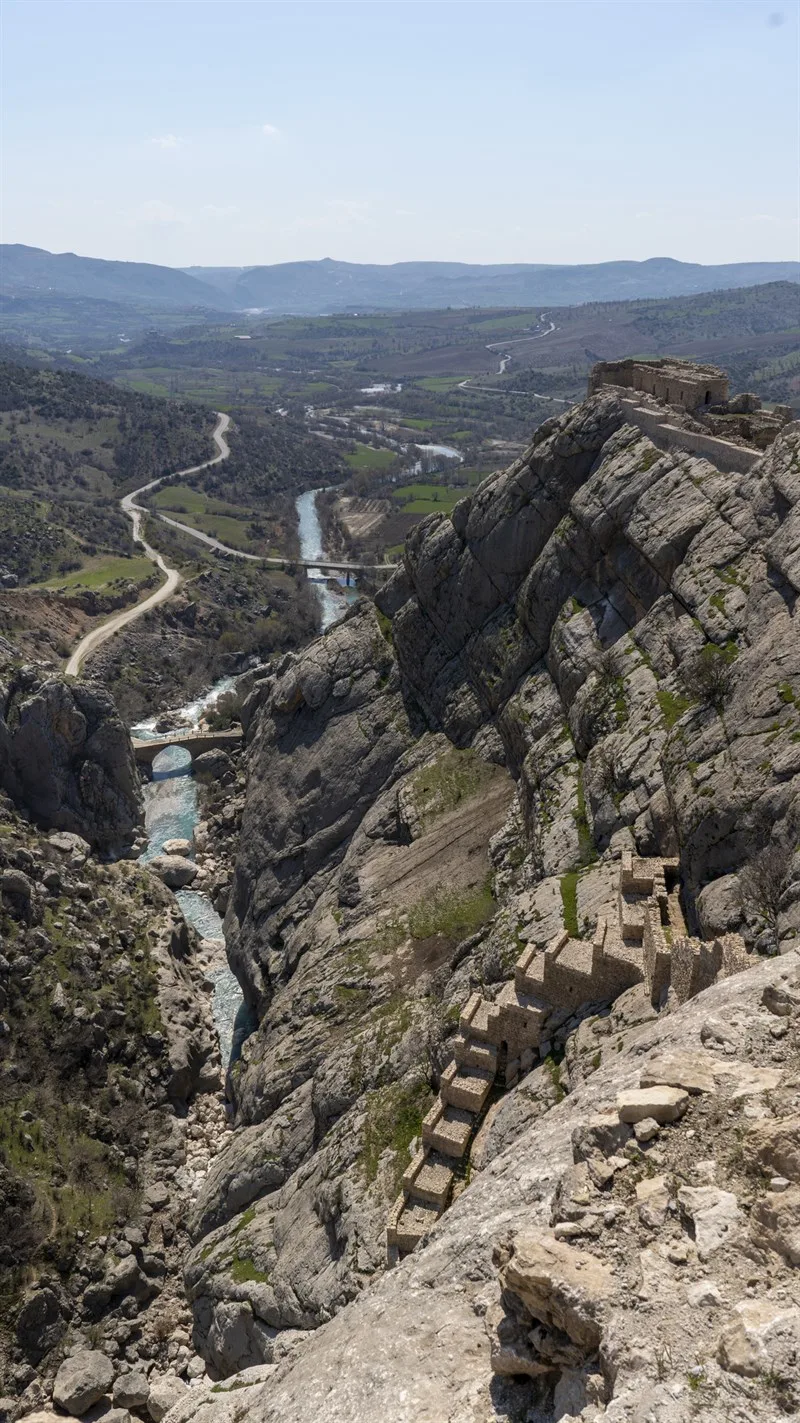
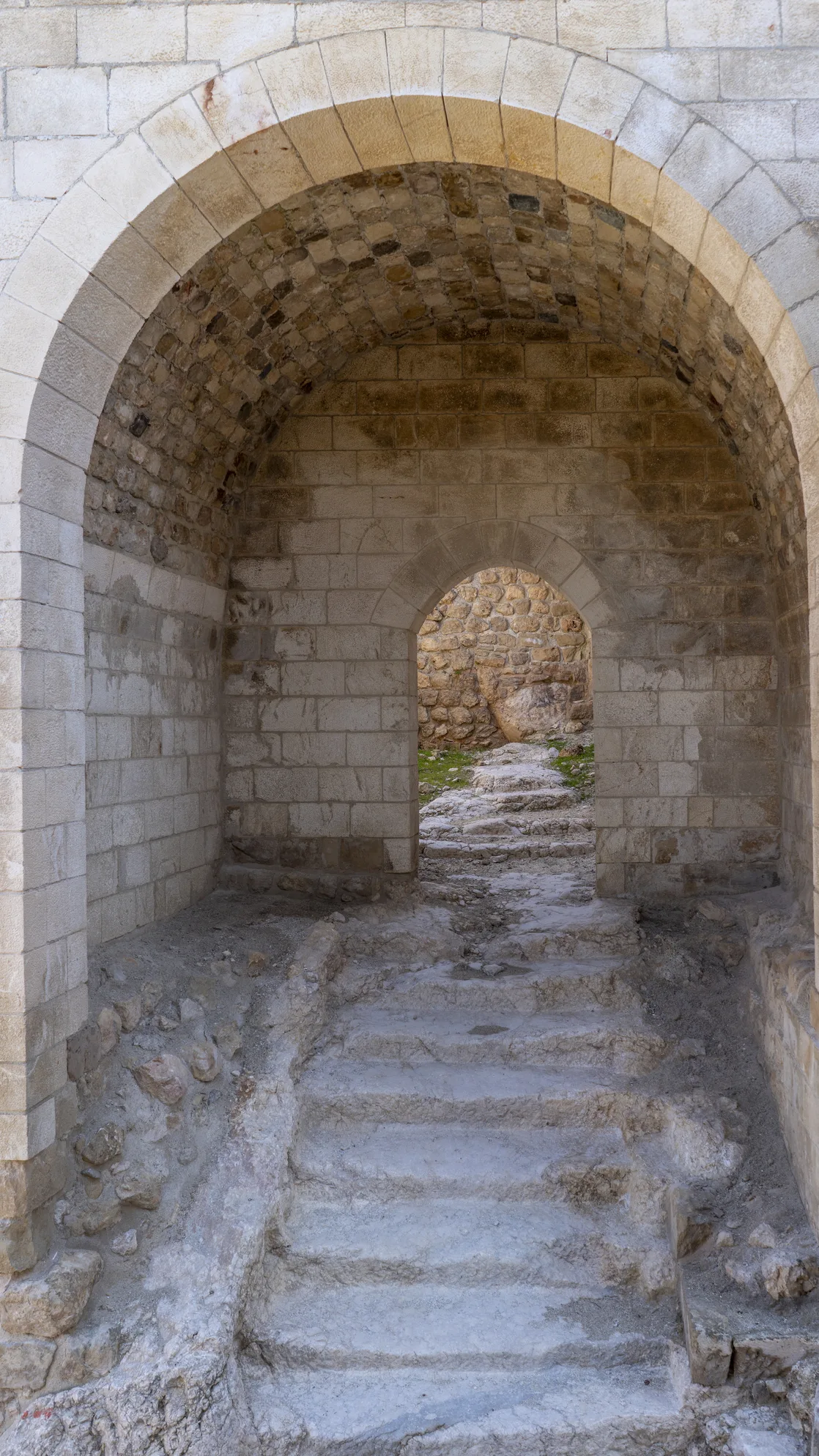
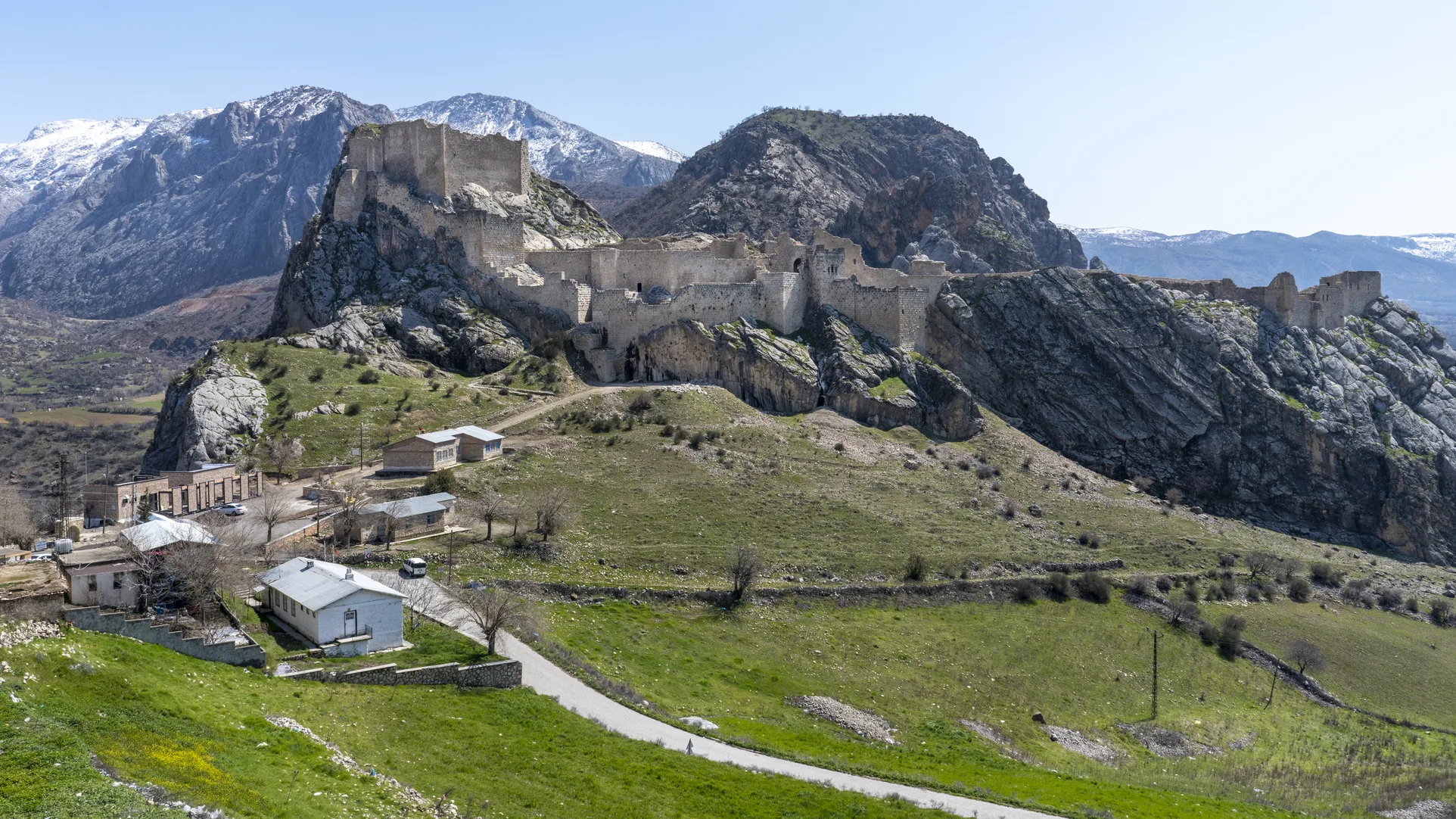
The historical castle, used by the Commagene, Roman, Mamluk, Seljuk, and Ottoman empires, is located 20 km north of present day Kahta, directly opposite Arsameia, in the village of Kocahisar (Old Kahta). While the exact construction date is unknown, it is believed to date back to the Hittite period in the 2nd century BC. It is situated on steep cliffs west of the Kahta River, between the Old Kahta Castle (New Castle), which was first established during the Commagene Kingdom, and the original castle. It is known to have been used and shaped by the Romans later on. The technological capabilities used to build this castle on steep slopes are astonishing. Later additions and alterations were made. During the Mamluk period (1250-1517), significant changes were made, resulting in its current form. The castle's current structure and inscriptions belong to the Mamluks. The Mamluks used this castle as a base while resisting the Mongols. Most of the traces remaining in the castle today belong to the Mamluks. It was used for a long time, with additions made by various states that conquered it, including the Seljuks and Ottomans; one of those who repaired the castle was Ottoman Sultan Mahmud I. No further repair work has been done on the castle since that time. The castle gate is on the side of Kocahisar village. Inside, there is a water cistern, a mosque (with Kufic inscriptions), a meeting hall (with a quadruple vaulted stone arch ceiling), a dungeon, battlements, a water channel leading down to the river, a dovecote staircase, covered passage galleries, etc.
New Castle (Kahta Castle)
Kahta, Kahta, Adıyaman
Information
Category
Historical Places
Historical Places
Address
Kahta, Kahta, Adıyaman
Kahta, Kahta, Adıyaman
Views
470
470
Overview
Nearby Places
Map
Kahta, Kahta, Adıyaman
Activities in the Area
No activities found in this area.
Events in the Area
No events found in this area.