

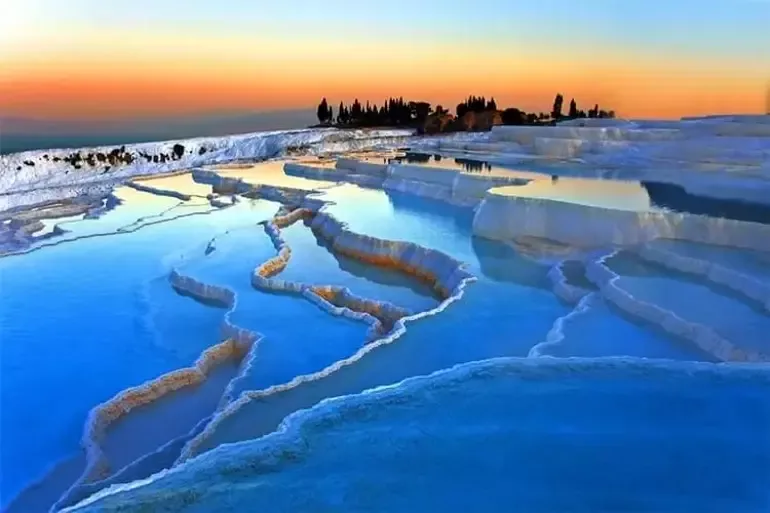
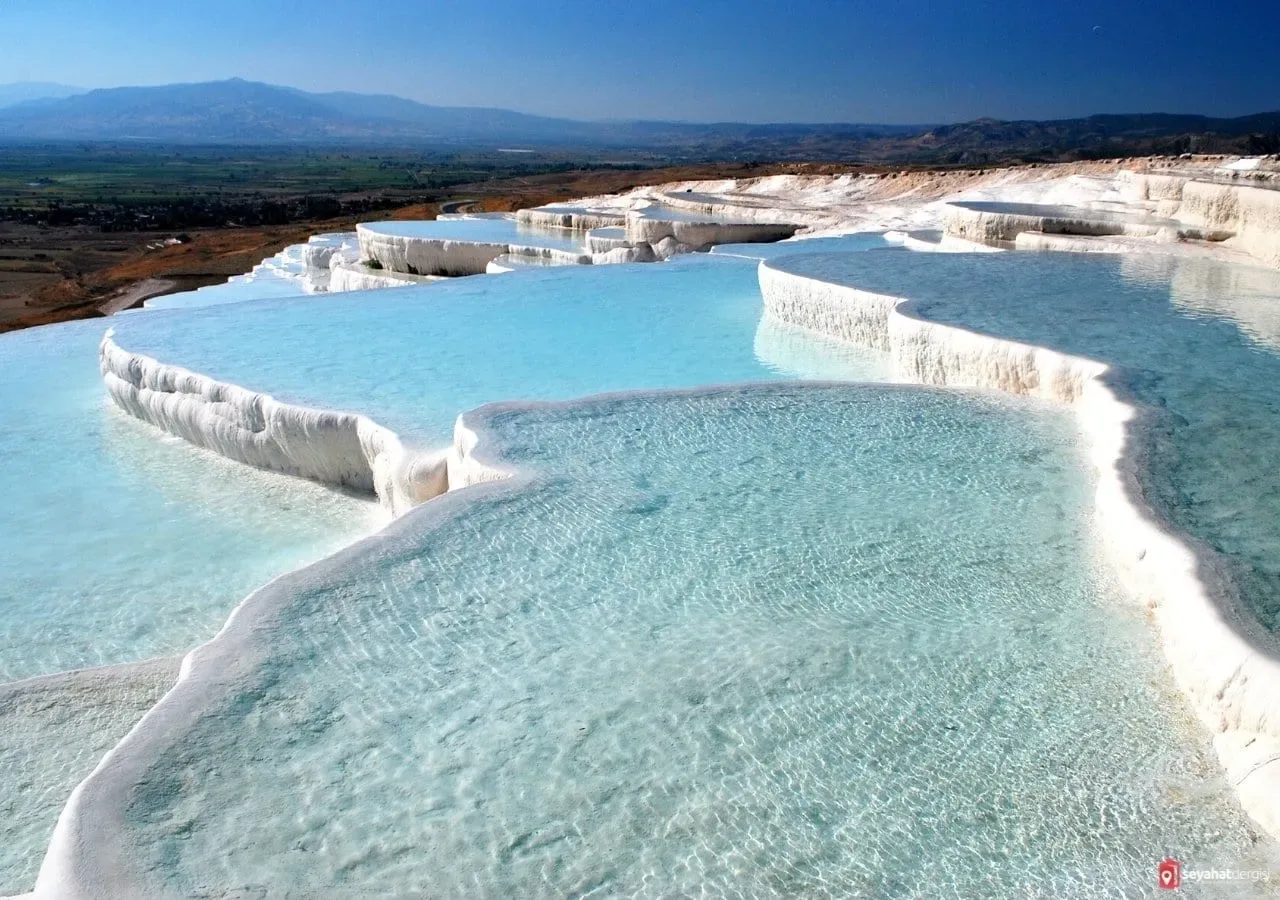
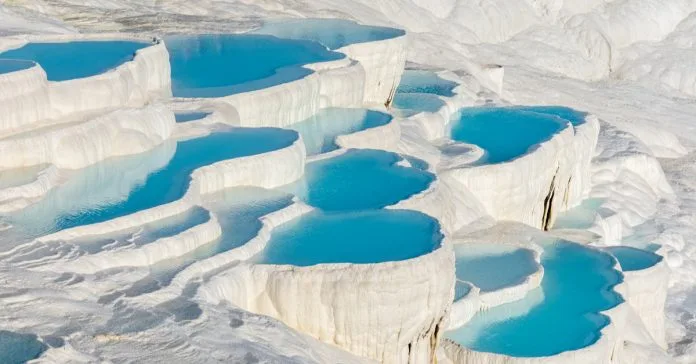
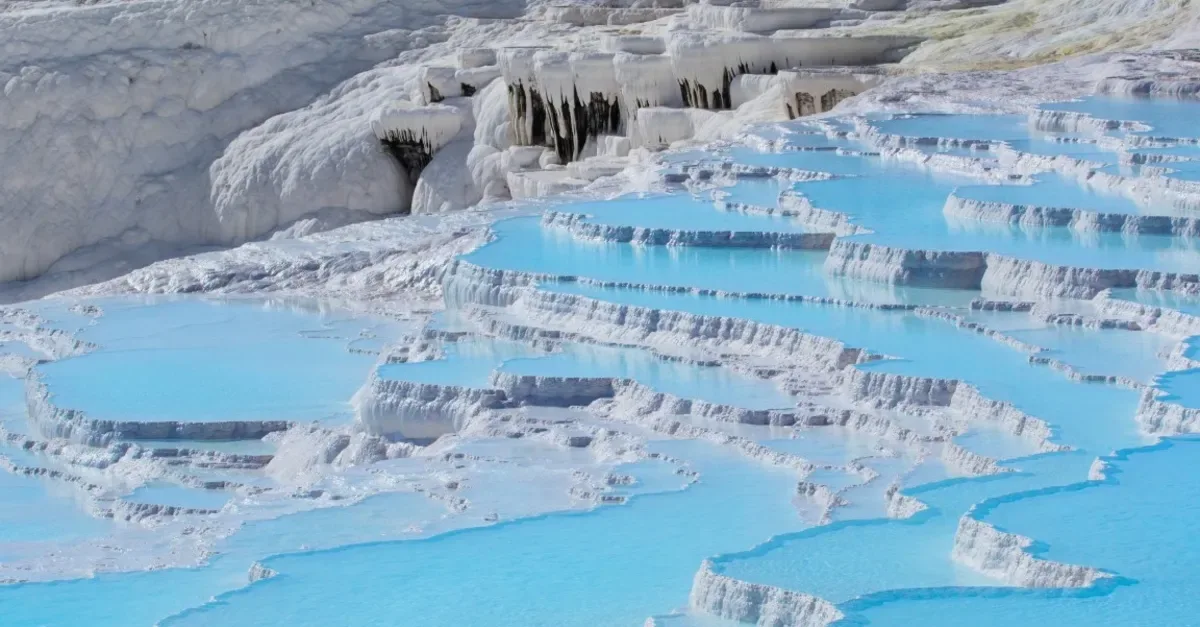
Travertine is a versatile rock formed by precipitation as a result of chemical reactions, depending on various reasons and environments. The geological events that created the Pamukkale thermal spring affected a wide area. There are 17 hot spring areas in this region with temperatures ranging from 35-100°C. The Pamukkale thermal spring is a unit within the regional potential. The spring has been used since ancient times. After emerging from the spring, the thermal water travels through a 320m long channel to the travertine formations, and from there, it cascades down travertine layers where partial precipitation occurs over a distance of 60-70m, covering an average distance of 240-300m. The water, which emerges from the spring at a temperature of 35.6°C and contains a high amount of calcium bicarbonate, reacts with oxygen in the air, releasing carbon dioxide and carbon monoxide, causing calcium carbonate to precipitate and resulting in travertine formation. The precipitate is initially in a gel like state.
PAMUKKALE TRAVERTINES
Pamukkale, Denizli, Denizli
Information
Category
Natural Beauties
Natural Beauties
Address
Pamukkale, Denizli, Denizli
Pamukkale, Denizli, Denizli
Views
459
459
Overview
Nearby Places
No nearby content yet.
Map
Pamukkale, Denizli, Denizli
Activities in the Area
No activities found in this area.
Events in the Area
No events found in this area.