

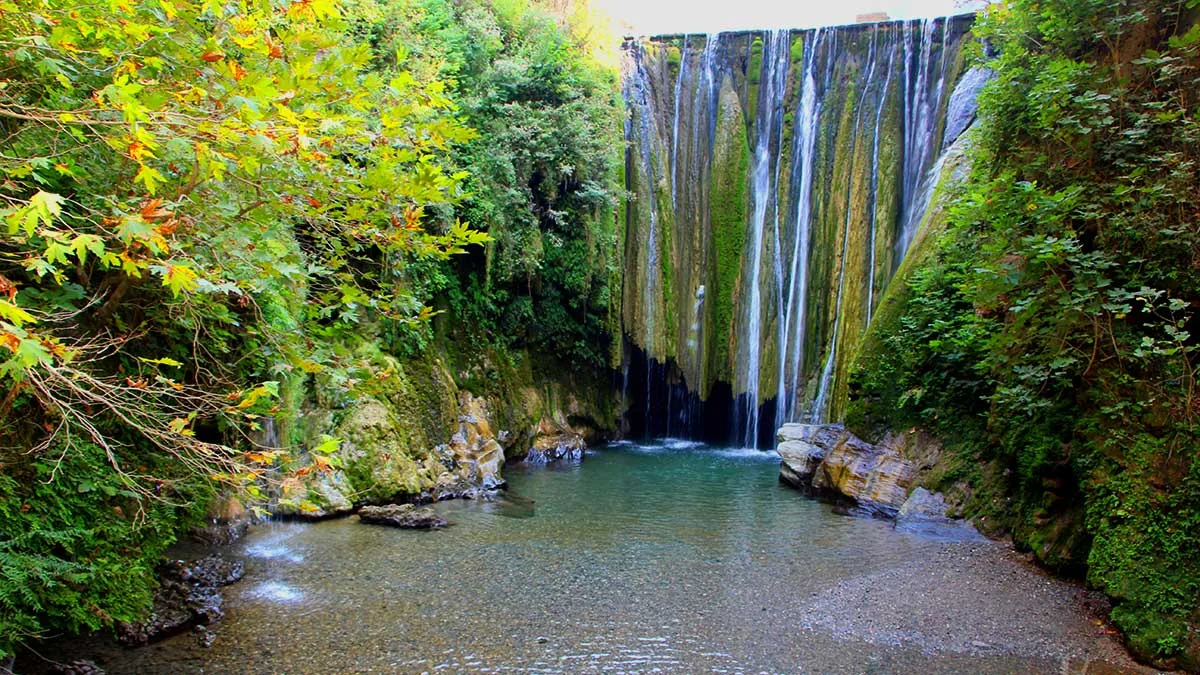
It originates from the foothills of Düldül Mountain in the Düziçi district of Osmaniye province and flows into the Ceyhan River via the Aslantaş Dam. The Sabun River irrigates a large portion of the Düziçi Plain. Its crystal clear waters are replete with fish, and picnics are plentiful. The water is supplied by very clean springs and irrigates a large portion of the Düziçi Plain. However, this irrigation is insufficient. Because producers cannot irrigate their crops promptly and sufficiently, the cultivated area is gradually decreasing each year. The Sabun River, influenced by the Mediterranean climate, has an irregular flow pattern. The flow rate, which begins in October, peaks in March at 8.8 m³/sec. The lowest value is 0.5 m³/sec in August. The river is approximately 44 km long, approximately 20 km of which lies within the Düziçi Plain. The basin area is 428 km². The river has seven important branches; Atalan Creek, Sabunsuyu Creek, Deliçay Creek, Hodu Creek, Kaledibi Creek, Zindoğan Creek, and Farsak Creek. [1] After passing the Amanos Mountains, where it takes its source, the Sabun River forms waterfalls and gorges as it passes into the plains. The valley floor width of the narrow and deep gorges formed by the river, which cuts deeply into the plains, is about 8-10 meters. To the north of the river is the Haruniye Plateau, which is the transition stage to the Amanos Mountains. The plateau has an elevation of 300-500 m, a width of 3 km, and a length of 5 km. Since the rocks of the land through which the Sabun River flows have different resistances, it forms structural meanders, giant cauldrons, and waterfalls with the contribution of faults. [2] The Çatak Gorge is a large gorge valley formed by the Sabun River. The gorge, which is 3 km long, extends east west. The Big Waterfall is an important waterfall among the waterfalls formed in the 500 m deep gorge. Source: Wikipedia
Sabunçayı Waterfall
Düziçi, Osmaniye
Information
Category
Waterfalls
Waterfalls
Address
Düziçi, Osmaniye
Düziçi, Osmaniye
Views
350
350
Overview
Nearby Places
No nearby content yet.
Map
Düziçi, Osmaniye
Activities in the Area
No activities found in this area.
Events in the Area
No events found in this area.